
Helping stroke survivors rebuild their lives in southeast Edmonton
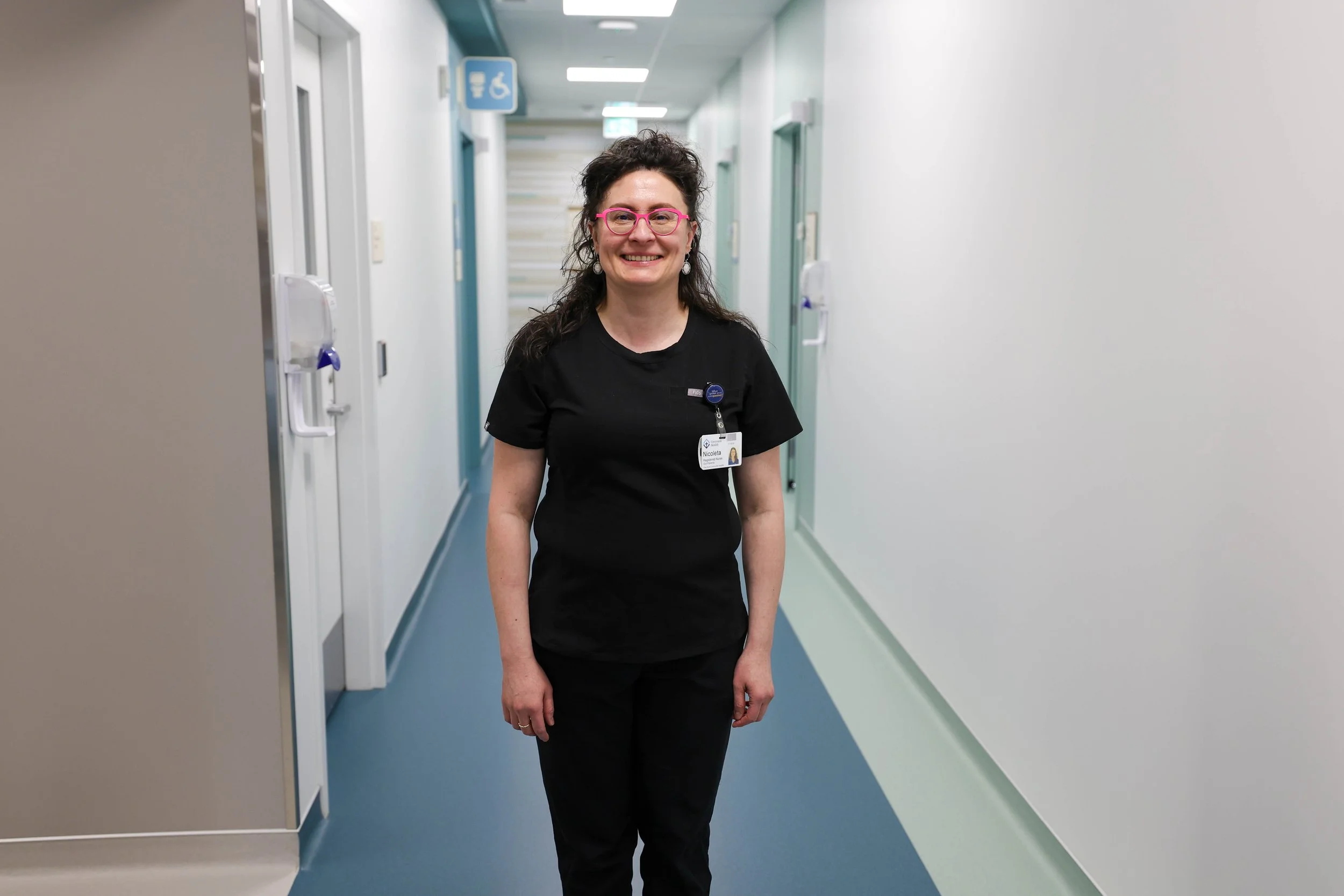
The stroke prevention clinic at the Stelmach Community Health Centre provides comprehensive follow-up care for people who have experienced a stroke or are at risk. The clinic ensures patients don't feel abandoned after leaving the hospital and helps them navigate their recovery with ongoing support.
Catching patients before they fall through the cracks
After someone has a stroke, the initial emergency treatment and hospital stay are just the beginning. What happens next can make the difference between a full recovery and ongoing struggles.
"We are the first contact in the community that patients have after their stroke," says Nicoleta Torrington, a registered nurse who has worked in stroke care for 17 years and with the stroke prevention clinic for 12 years. "We're kind of their lifeline to stroke services."
The clinic sees patients referred from emergency departments, inpatient stroke units, the Glenrose Rehabilitation Hospital and various community sources, including family doctors, optometrists, vascular surgeons and even dentists.
More than just a follow-up appointment
When patients arrive at the clinic, Nicoleta takes them through a thorough assessment that goes far beyond their basic vital signs. She checks height, weight and blood pressure twice to ensure accuracy, then reviews medications and asks about recovery progress.
But the real work happens in the conversation that follows.
"A lot of patients want to express their concerns because usually family doctors do not have time to listen to everything," says Nicoleta. "They have valid concerns, and it's a very different kind of normal that they have to get used to with the deficits they have after their stroke."
Patients often need to talk about mood changes, sexual function and other personal issues that affect their daily lives. Having the time and space to address these concerns makes a real difference in their recovery, says Nicoleta.
Connecting patients to what they need
The clinic serves as a hub that connects patients to a wide range of services. Working with the clinic physicians, Nicoleta assesses whether patients need referrals to services such as physiotherapy, speech pathology, smoking cessation programs, nutrition counselling, weight loss programs, a hypertension clinic, a lipid clinic and a post-stroke mood disorder clinic, among others.
Nicoleta and the clinic staff also handle practical matters that patients might not think to ask about, like fitness to drive assessments and handicap placards.
"I have to assess all these things," Nicoleta says. "I also assess how they're healing after their stroke because the initial deficits they have can improve over time as the brain heals."
Teaching patients to recognize warning signs
Education forms a critical part of every visit. Many patients don't realize that having one stroke puts them at higher risk for another.
"The likelihood of getting another stroke after you have your initial one is quite high, like up to 30 per cent within five years," says Nicoleta.
Nicoleta makes sure every patient understands stroke warning signs and knows to call 911 immediately if symptoms appear. For patients who live alone and have had multiple strokes or falls, she provides information about services like Lifeline.
Reaching younger patients
Stroke isn't just a condition that affects older adults. The clinic is seeing an increasing number of younger patients.
"A lot of my patients — believe it or not with all the social media and all the access that they have — a lot of them ignore their symptoms and do not realize that strokes can happen in the young," Nicoleta says.
Getting these younger patients into treatment quickly and then following up with them can prevent the kind of long-term disabilities that would otherwise be a burden to them and to the healthcare system, says Nicoleta.
A small team handling a large volume
The stroke prevention clinic operates with a lean but effective team. Nicoleta works as the full-time stroke nurse alongside Harlene Desepeda, a unit clerk who processes orders, books appointments and co-ordinates care with other departments. Christine Maslanko, a part-time pharmacist, joins the team one day a week. The clinic also works closely with neurologists, a dietitian and rehabilitation services.
Despite its small size, the team sees a substantial number of patients.
"For as small of a clinic that we are, we see quite a few patients here," says Nicoleta.
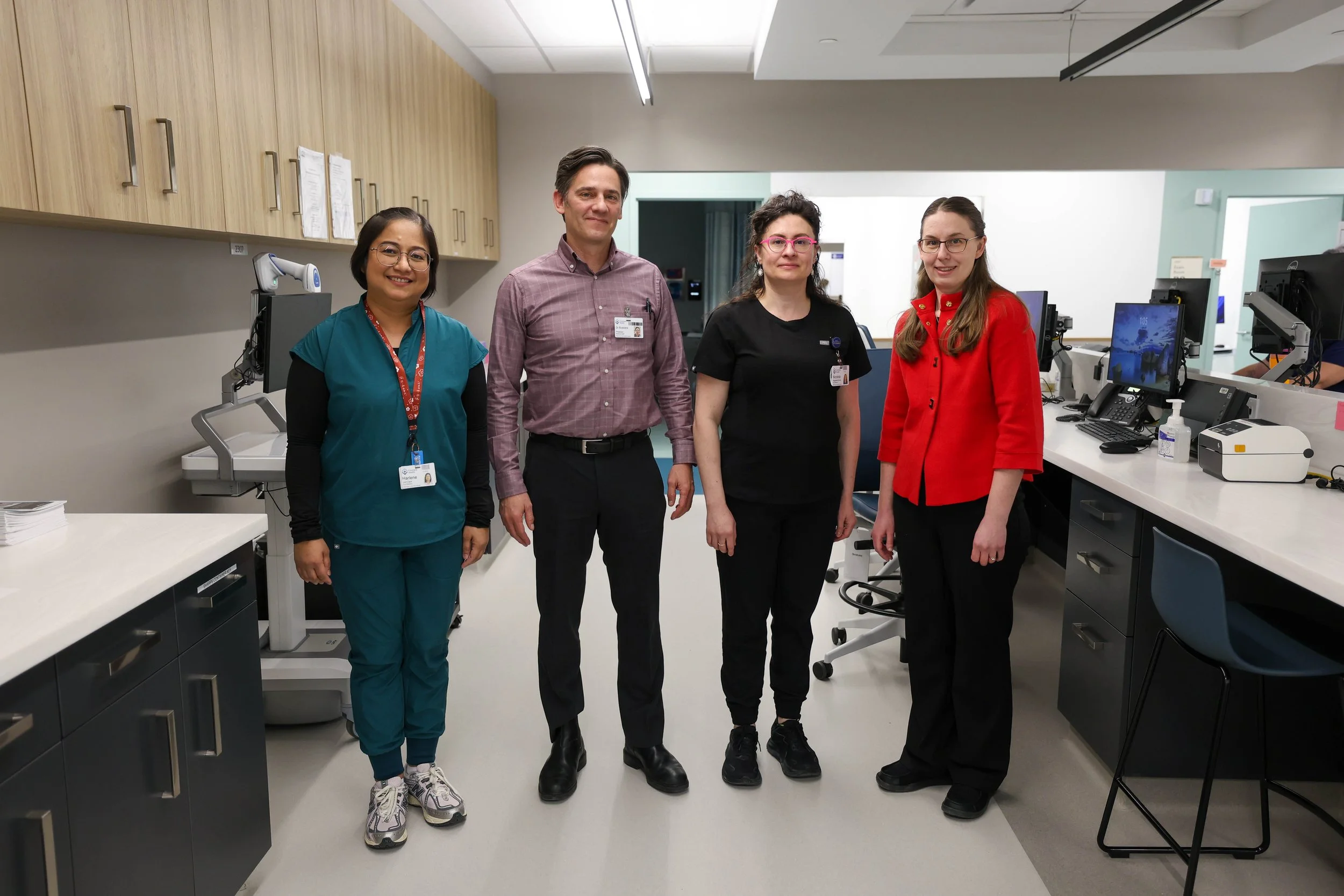
(From l. to r.) Harlene Desepeda, unit clerk, Dr. Bussiere Miguel, neurologist, Nicoleta Torrington, registered nurse, and Christine Maslanko, pharmacist, are some of the members of the stroke prevention clinic team.
Finally having room to breathe
The clinic previously operated in cramped quarters at the Grey Nuns Community Hospital, where space became increasingly tight after emergency services expanded into the outpatient department rooms.
"We were very, very crowded," Nicoleta says. "All the other clinics moved into my clinic."
Sharing rooms with other clinics meant patients sometimes had to wait in the waiting area before being seen. It also meant Nicoleta often felt rushed during patient teaching.
"Sometimes I had a limited amount of time I could spend with patients in the room," she says.
The move to the Lakewood Stelmach Community Health Centre changed that reality. The clinic now has space designed specifically for its needs.
What the new space means for patients
The improved facilities translate directly into better patient care. With more rooms available, wait times decrease and privacy increases. Most importantly, Nicoleta can spend the time patients need without feeling pressured to hurry.
"Patients with stroke are very vulnerable," she says. "They need to express their concerns. They need to reach out for help, and they feel more comfortable if I spend the time with them and I have the space for them."
The new location also makes it easier for patients to access other services. If they need blood work, a pharmacy or other medical services, they can find them in the same building.
Building on early rehabilitation
The clinic works in partnership with rehabilitation programs to provide continuity of care. While the Glenrose Rehabilitation Hospital provides excellent early intervention, patients need ongoing support in the community.
"Early rehab is very important for stroke patients to get most of their function back, but they need more rehab in the community," says Nicoleta.
She connects patients with programs like the Glenrose hospital’s Adult Specialized Rehabilitation Outpatient Program and the Community Rehabilitation Interdisciplinary Service, which offers multidimensional services.
The goal is to address not just physical recovery but also risk factors like sleep apnea, which can be evaluated right at the Lakewood Stelmach Community Health Centre at the sleep clinic.
Preventing the next stroke
The clinic's name reflects its core mission: prevention. By following up with patients, managing their risk factors and ensuring they have the support they need, the clinic works to prevent future strokes.
"If they come in right away, they get all the treatments that they need, like the clot buster, and then they get the rehabilitation," Nicoleta says. "They're being followed up by us to make sure that everything is going smoothly for them and that they have access to all these services afterwards so that they don't feel abandoned."
Patients typically receive their first appointment within four weeks to two months after their stroke, giving the brain enough time to begin healing while still providing timely intervention.
The stroke prevention clinic represents a bridge between acute hospital care and long-term community living, ensuring that stroke survivors get the comprehensive support they need to rebuild their lives.

Find your way with Covenant Map
With the Covenant Map app, explore everything the Stelmach Community Health Centre at Covenant Wellness Community has to offer.
Download on the App Store or Google Play.