
Supporting women through menopause
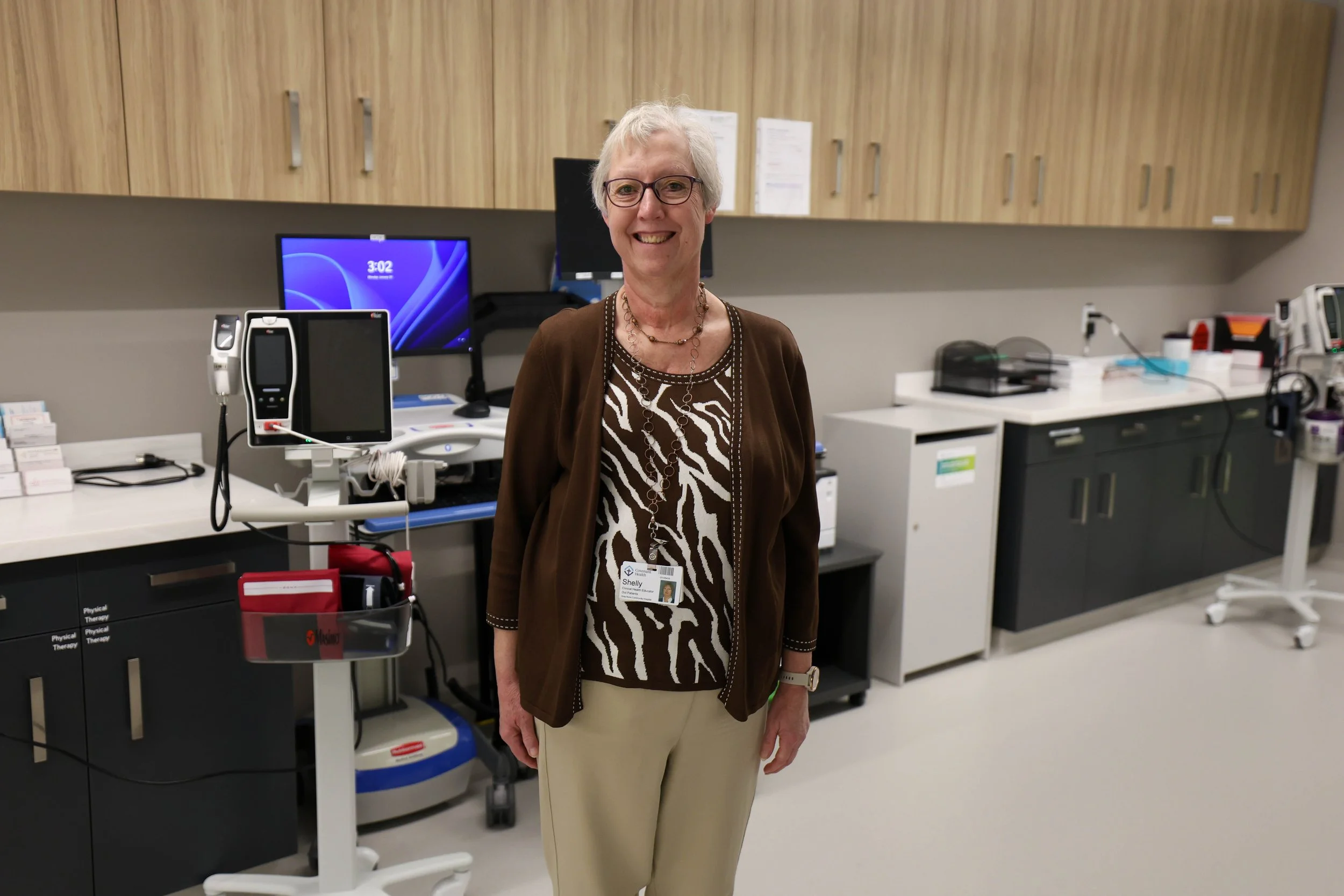
The menopause clinic at the Stelmach Community Health Centre helps women navigate one of the most common — and most overlooked — stages of life. As the only interdisciplinary menopause clinic in Alberta, it provides education, assessment and treatment for women dealing with symptoms that range from manageable to life-altering.
An interdisciplinary approach
While there are individual clinicians, private clinics and a growing number of virtual services that address menopause across Alberta, the menopause clinic at the Stelmach Community Health Centre is the only one in the province that brings together a full interdisciplinary team under one roof.
"There's lots of clinicians out there who specialize in menopause, but they're sort of doing it individually," says Shelly Hagen, a health educator, registered dietitian and Menopause Society Certified Practitioner (MSCP) who has been with Covenant Health since 1997. "We are the only interdisciplinary team providing menopause care in the province."
Along with Shelly, the team includes four family doctors who rotate through the clinic, two gynecologists, a pharmacist, administrative support and support from the nurses in the outpatients clinic at the health centre. Like Shelly, the four family doctors all hold MSCP designations.
Who the clinic serves
The menopause clinic is a consultative service, meaning patients need a referral to access care. While the clinic receives referrals for a wide range of menopause-related concerns, the team prioritizes women with the most complex needs.
High-priority referrals include women who are experiencing primary ovarian insufficiency (i.e., their ovaries have stopped producing hormones before age 40), those with complicated medical histories and those who have been through chemotherapy or pelvic radiation that triggered menopause at a young age.
“Our preference is to be the clinic that sorts out those really unusual, hard-to-deal-with menopause situations,” says Shelly.
Shelly notes that women who have had their ovaries surgically removed also often need the clinic’s specialized care. These patients tend to experience more intense and longer-lasting symptoms, especially when surgery happens at a younger age. While their gynecologist may prescribe hormone therapy, their primary care physician may have difficulty following up with the therapy because they are not aware of the product options and the doses required.
“It’s a little bit overwhelming for family doctors because the way you manage hormone therapy for a 34-year-old is quite different than for a 54-year-old,” Shelly says. “Sometimes they aren’t comfortable with hormone therapy regimes.”
A growing wait list
Demand for the clinic has surged in recent years, Shelly says. The wait list has grown from roughly 175 patients to upwards of 700. The team has responded by adding extra clinic days — up to five per week — when physician schedules and space allow. Still, the team has had to decline 50 to 60 referrals a month due to capacity, says Shelly. Rather than sending back a simple "declined, lack of capacity" notice, the physicians review each referral and write a detailed letter with treatment suggestions the referring doctor can try with the patient.
How appointments work
The initial appointment for the clinic’s patients happens in two parts. First, they attend a two-and-a-half-hour online class taught by Shelly that covers a general overview of menopause and symptoms.
"We're very education focused," Shelly says. "The whole purpose of our clinic is to support informed decision-making."
Then, on a separate day, each patient comes to the clinic in person. At that first in-person visit, a nurse takes the patient’s height, weight and blood pressure. Shelly then spends about 60 minutes with the patient, working through a detailed health profile that covers their reproductive history, current symptoms, priority concerns, family history, lifestyle and health screenings.
After the interview with Shelly, the patient meets with a physician who determines a treatment plan and orders any necessary tests. If a new prescription, or a prescription change, is needed, the pharmacist walks the patient through how to get started or how to switch to the new therapy. Followup appointments are typically scheduled for three months later, and most are done virtually.
Between appointments, Shelly provides phone support to troubleshoot issues or connect patients with the pharmacist if needed.
"I'm pretty involved with these women," Shelly says. "We usually have a pretty good affinity."
A consultative model
Because the clinic can't follow every patient long-term, the goal is to work with them over one to three visits, develop a solid plan and then discharge them back to their family doctor, says Shelly. The physicians send detailed notes after every visit so the referring doctor knows what the plan is and what's been tried.
There are exceptions, Shelly says. Some patients stay under the clinic’s care longer because their family doctor isn't comfortable prescribing or monitoring hormone therapy, especially off-label therapies like testosterone for low libido, which is not approved by Health Canada. In those cases, the clinic will follow up with the patient once a year while they are on the therapy.
More space and a new perspective
Before operating out of the Stelmach Community Health Centre, the menopause clinic was locatedat the Grey Nuns Community Hospital.Being at the new facility has improved how the clinic operates day to day, says Shelly. At the previous location, the team struggled to work with limited rooms and only one setup for gynecological exams. Now it has more clinic rooms — three equipped for exams — which means patients no longer need to be shuffled between rooms mid-appointment.
The extra space has also made it easier to add clinic days and see more patients, which is helping reduce the wait list, Shelly says.
Another thing Shelly appreciates about being at the health centre is what it signals to patients. Menopause is a normal part of aging and having the clinic in a community wellness setting rather than a hospital reinforces that, she says.
"We're not in a hospital, which sort of de-medicalizes menopause. Menopause is not an illness, and it's not a disease. That's why the clinic can be a community-based delivery point. Being located (in the health centre) is really positive from that perspective."

Find your way with Covenant Map
With the Covenant Map app, explore everything the Covenant Community Health Centre at Covenant Wellness Community has to offer.
Download on the App Store or Google Play.