
Screening for cervical cancer in the community
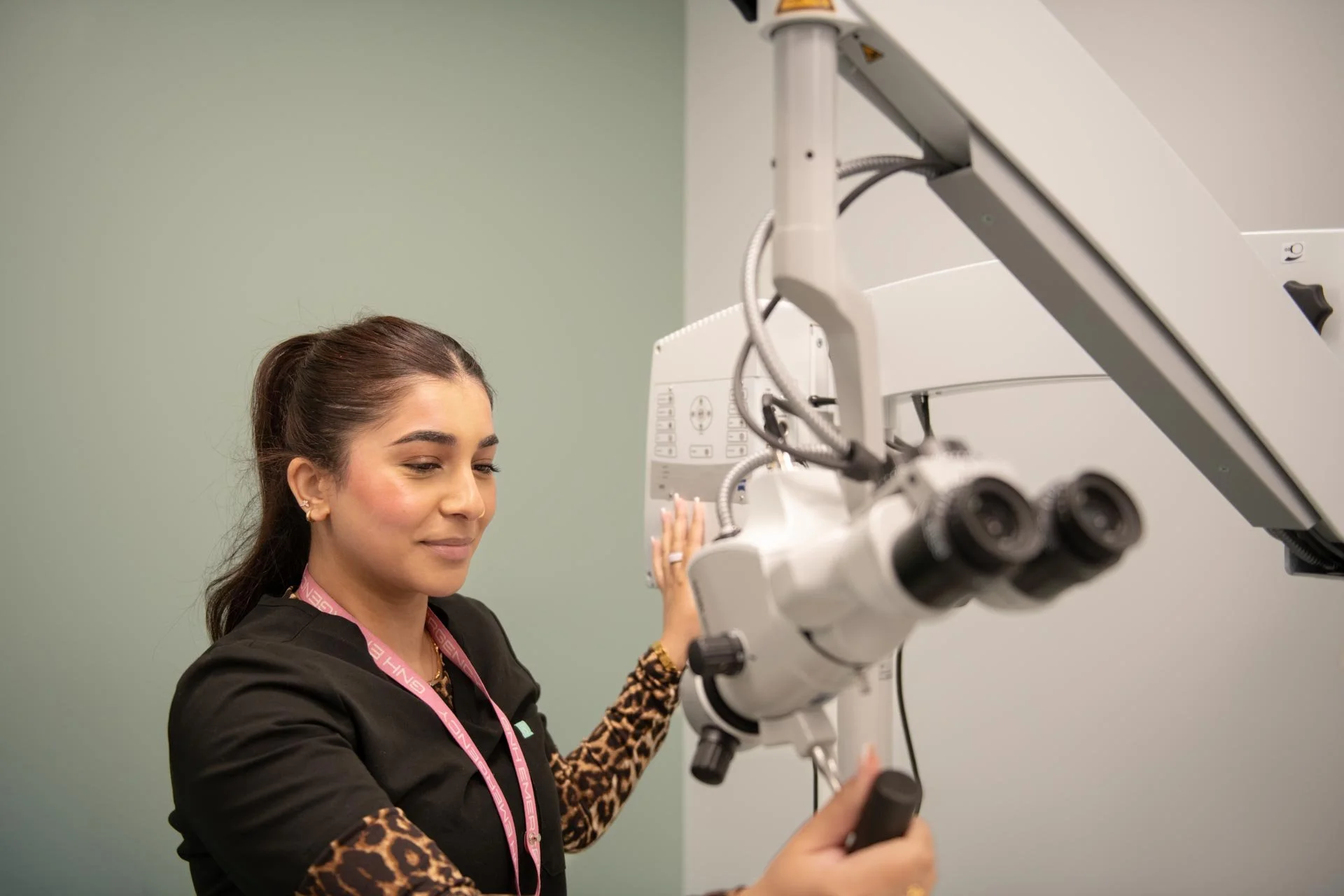
For women in southeast Edmonton, the colposcopy clinic at the Stelmach Community Health Centre offers peace of mind and care during a vulnerable time. It provides specialized screening for cervical cancer, catching abnormal cells early and monitoring patients until they’re ready to return to their family doctor’s care.
What the clinic does
Colposcopy is a procedure used to examine a woman’s cervix for abnormal cells that could potentially lead to cervical cancer. Women are referred to the clinic by their family doctor after having an abnormal pap smear. The clinic's physicians take a biopsy of the patient’s cervix and send it to the lab for testing. The results determine whether the patient needs treatment or simply ongoing monitoring.
Patients remain under the clinic’s care until all their test results are negative, and then they are discharged back to their regular primary care physician, says Barb Sobkowich, the clinic’s lead colposcopy nurse, who has been with Covenant Health for 20 years.
The clinic also educates patients about human papillomavirus (HPV), a common virus that can cause cervical and other forms of cancer and disease, as well as about GARDISIL®9, the vaccine for HPV prevention.
Who the clinic serves
While the clinic sees women of all ages — from their late 20s to their 70s — with abnormal pap smear results, the criteria for referral depend on the severity of the abnormality and the patient's age, says Barb.
Abnormal cells are classified as either low-grade or high-grade. High-grade abnormal cells, such as squamous cells, carry a greater risk of developing cervical cancer, while low-grade abnormal cells, such as low-grade squamous intraepithelial lesion (LSIL) cells, progress more slowly but still require monitoring.
Women whose pap smear results include high-grade abnormal cells are referred to the clinic for immediate attention. "When there are high-grade cells, we need to do actual treatment where we remove the top layer of the cervix and scrape off the abnormal cells," says Barb. "If left untreated, the cells will turn into cervical cancer."
For low-grade results, the referral criteria depend on age. Women over 28 or 29 may be referred for screening at the clinic after a single abnormal result. Younger women typically need to have two consecutive low-grade pap smears before being referred.
The team
The colposcopy clinic is run by a small but dedicated team. Along with Barb, who does colposcopy and manages patient communication, education and co-ordination, the team includes two gynecological oncologists who see patients on clinic days, and a clinical assistant, who sets up trays, stocks supplies and assists the doctors during procedures.
The broader outpatient clinic staff at the health centre are also trained to room patients and assist during colposcopy appointments when needed.
Long-term followup
Once a patient enters the clinic's care, they remain with the clinic until their results come back negative. That can take time, says Barb. Some patients have been with the clinic for up to three to five years.
“When everything comes back negative and they have two negative readings, the physicians send them back to their doctor to do yearly pap smears."
If a patient's condition does progress to cervical cancer, the clinic's gynecological oncologists take over their care directly.
HPV and an aging population
In the last few years, the clinic has seen a shift in its patient population due to HPV, says Barb. Most commonly spread through sexual activity but also through non-sexual contact with an infected person, the virus can sit dormant in a woman's body for years before causing problems. New testing guidelines for women between 50 and 69 are now screening specifically for HPV, and the virus is showing up more frequently in older women.
“It just seems to be rearing its ugly head in the older population," says Barb. "We are definitely going to increase our patient load because of that particular age group."
Barb is a strong advocate for the GARDISIL®9 vaccine, which is now offered to children in Grade 6. She acknowledges that some parents hesitate to have their children vaccinated because of HPV’s association with sexual activity but stresses that early vaccination can prevent HPV infection later in life.
"Parents don't realize that if children get the HPV vaccine now while they're young, it can help prevent them from contracting HPV in the future," she says. "It's not the cure-all end-all, but it is definitely something that could help prevent this from spreading."
More space, less waiting
The colposcopy clinic is one of many outpatient clinics at the Stelmach Community Health Centre that previously operated out of the nearby Grey Nuns Community Hospital. The move to the Stelmach Community Health Centre has made a tangible difference for the team, says Barb. At the Grey Nuns hospital, the team had one colposcopy room and ran the clinic half a day each week. Now the team has two rooms and runs a full-day clinic, typically on Tuesdays.
"We're able to get more patients in, and there's less wait time," says Barb.
The team now sees 18 to 22 patients on a full clinic day, and it has made enough progress on its backlog that it has reached out to Alberta's centralized surgical intake program — Facilitated Access to Specialized Treatment (FAST) — to request more referrals, Barb says.
A different feel
Barb says she appreciates the atmosphere of the Stelmach Community Health Centre, even though some patients still associate it with a hospital setting.
"With this space being a bigger facility than where we have come from, there's more of an opportunity to increase our clinics," she says. "The health centre provides more care to the community.”

Find your way with Covenant Map
With the Covenant Map app, explore everything the Stelmach Community Health Centre at Covenant Wellness Community has to offer.
Download on the App Store or Google Play.